

Pico Laser Facial
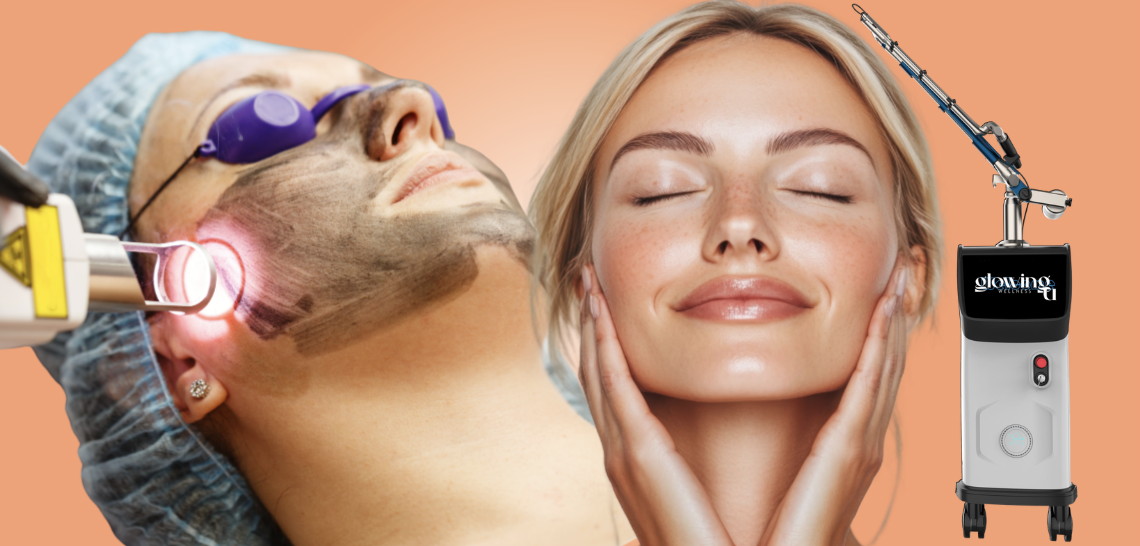
Beyond the Buzzword: Your Complete Guide to the Pico Laser
Part 1: The Core Principle – It’s All About the “Picosecond”
The secret isn’t just in the light, but in the speed. “Pico” refers to a picosecond—that’s one trillionth of a second. Older laser technology works in nanoseconds (billionths of a second). Think of it like the difference between gently erasing a pencil mark versus using a super-fast, ultra-precise chisel.
This incredible speed is the game-changer. It creates a photoacoustic effect (think of it as a powerful “pressure wave” rather than just heat) that acts like a microscopic jackhammer, shattering its target with minimal heat diffusion to the surrounding skin. Less heat means more safety and comfort for you.
Part 2: The Target: Shattering Your Unwanted Pigment
Your stubborn dark spots—be it sun damage, melasma, freckles, or post-acne marks—are clusters of melanin (pigment). Traditional lasers break these into “pebbles” that your body slowly removes.
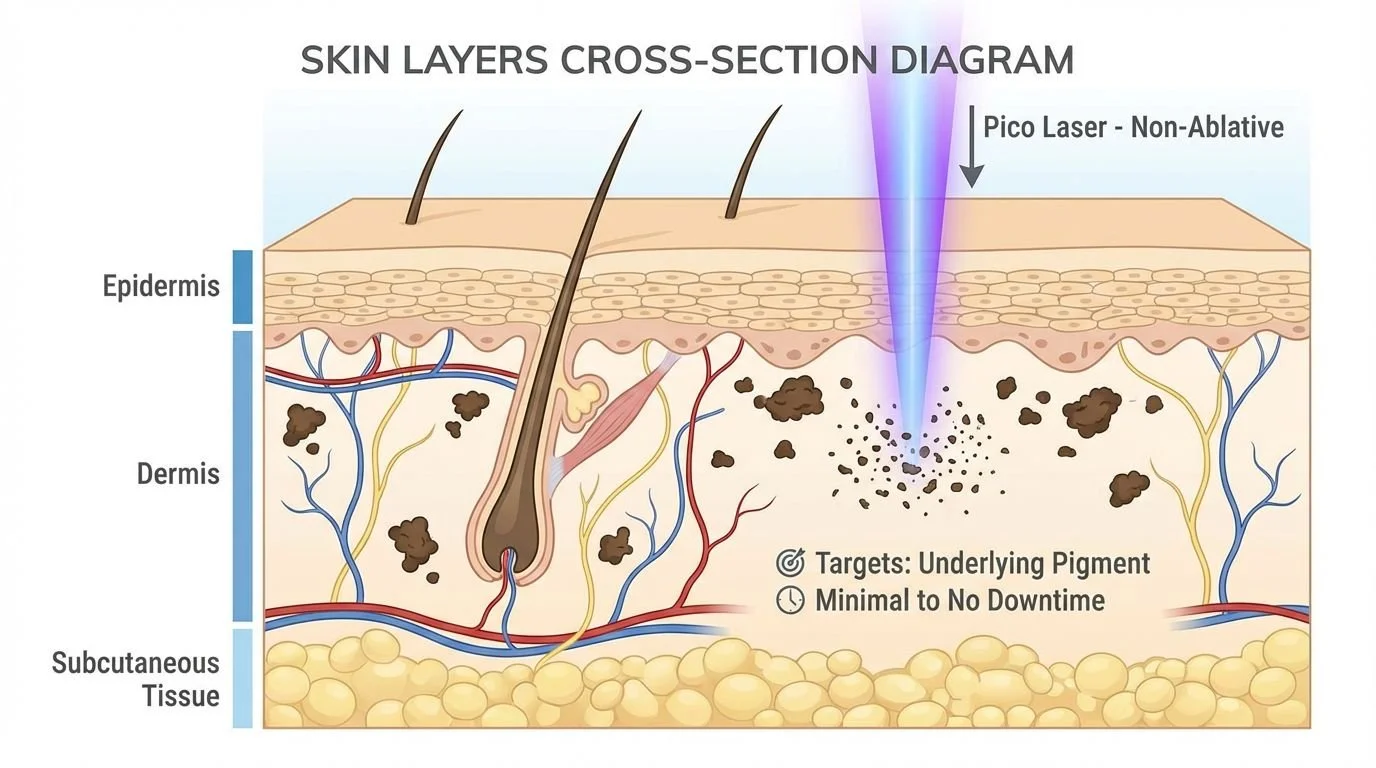
The Pico laser is so fast and powerful, it pulverizes these pigment clusters into fine “dust.” This microscopic dust is far easier for your body’s immune system to recognize, engulf, and eliminate naturally. The result? Pigment clears more effectively, often in fewer sessions, and with a reduced risk of post-inflammatory darkening.
Part 3: A Beautiful Bonus: The Collagen Boost
That powerful photoacoustic wave doesn’t just stop at pigment. As it travels through the dermis (your skin’s supportive layer), it creates controlled micro-injuries. This stimulates your skin’s natural healing process, kicking collagen and elastin production into high gear.
Think of this as a “reset” button for your skin’s foundation. This not only improves texture and fine lines over time but also creates a “cleaner canvas.” With fewer pigment barriers and renewed skin health, your prized serums and moisturizers can penetrate more deeply and work more effectively. It’s the ultimate prep for your skincare routine!
Part 4: The Color Code: Understanding Pico Wavelengths
Not all spots are created equal—they sit at different depths. Our multi-wavelength Pico laser allows us to select the precise “color” of light to target your specific concern.
532nm: The superficial specialist. Excellent for light brown or red pigments (like certain superficial sun spots or freckles) in the top layer.
755nm: The pigment all-rounder. A superstar for common brown sun damage and age spots that reside in the mid-layer of the skin.
1064nm: The deep diver. This longest wavelength penetrates the deepest. It’s our go-to for stubborn melasma and deeper-seated pigmentation, as it safely targets the problem below the surface. It’s also the safest and most effective setting for darker skin tones.
Part 5: Why Pico is a Safer, More Inclusive Choice
This brings us to one of Pico's greatest strengths: it is a non-ablative treatment.
Non-Ablative means it bypasses the surface. Unlike resurfacing lasers that create controlled damage on the top layer, Pico’s energy focuses beyond the surface, targeting the deep pigment directly. This means minimal to no downtime. You might experience slight redness or swelling for a few hours, but you can typically return to your daily life immediately.
A Safe Choice for Diverse Skin Tones: Because the 1064nm wavelength can selectively target deep pigment while sparing surrounding tissue from excessive heat, it dramatically reduces risks. This makes it one of the safest and most reliable laser options for clients with olive, brown, or Black skin.
Before & After


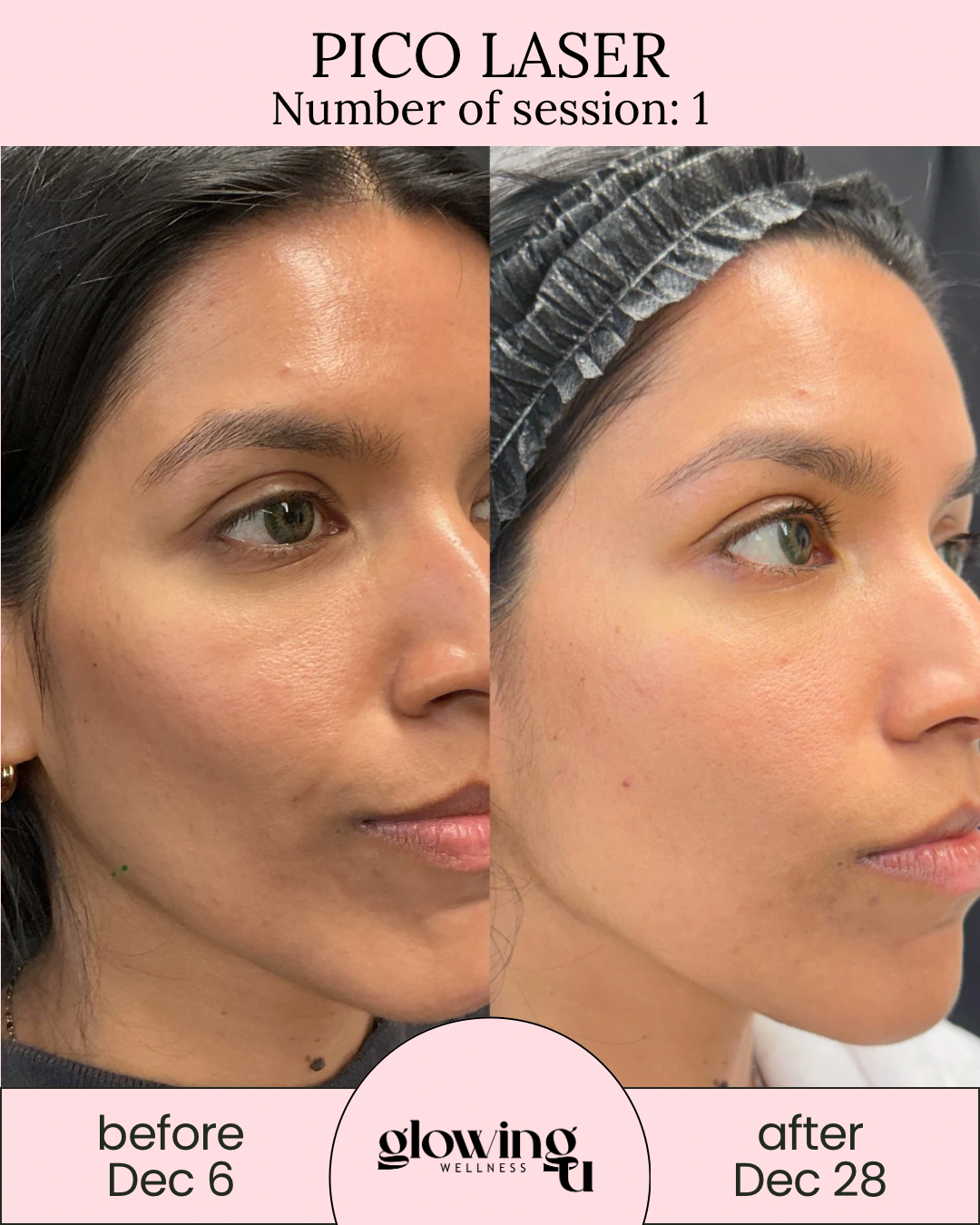
Our Torrance clinic serves Redondo Beach, Gardena, Lomita, Carson, Palos Verdes, Rolling Hills Estates, Manhattan Beach, Hermosa Beach, and San Pedro.
—————————————————————-
Your Pico Laser FAQs, Answered
Q: Am I a good candidate for Pico Laser?
A: If you are struggling with hyperpigmentation, sun damage, age spots, freckles, or melasma, then yes, you are an excellent candidate. Pico is also a fantastic choice for overall skin revitalization and improving texture. During your consultation, we will assess your skin to confirm it’s the perfect match.
Q: Can you solve my skin issue with just 1 treatment?
A: Realistically, no. The mechanism of Pico is to break pigment particles into smaller fragments with each session, allowing your body to clear them away gradually and safely. This ensures we avoid the side effects of more aggressive treatments. While you will see visible improvement after every session, achieving your best results requires a series.
Pico Toning (brightening): Minimum of 3 sessions.
Hyperpigmentation/Sun Damage: Typically 4-6 sessions.
Melasma: Often requires 6-10 sessions, managed with a careful plan.
Q: Do I need to pretreat my skin before a Pico session?
A: This depends on your plan.
Yes, we will pretreat if using higher energies for focused spot treatment. Pretreatment helps calm the skin for a safer, more effective session.
No, pretreatment is not typically needed for general Pico toning aimed at overall evening of skin tone.
Q: What’s the difference between Pico Laser and Fractional CO2 (like CoolPeel)?
A: This is crucial! They target different concerns.
Pico Laser is non-ablative. Its primary goal is to shatter underlying pigment beneath the skin. Downtime is minimal to none.
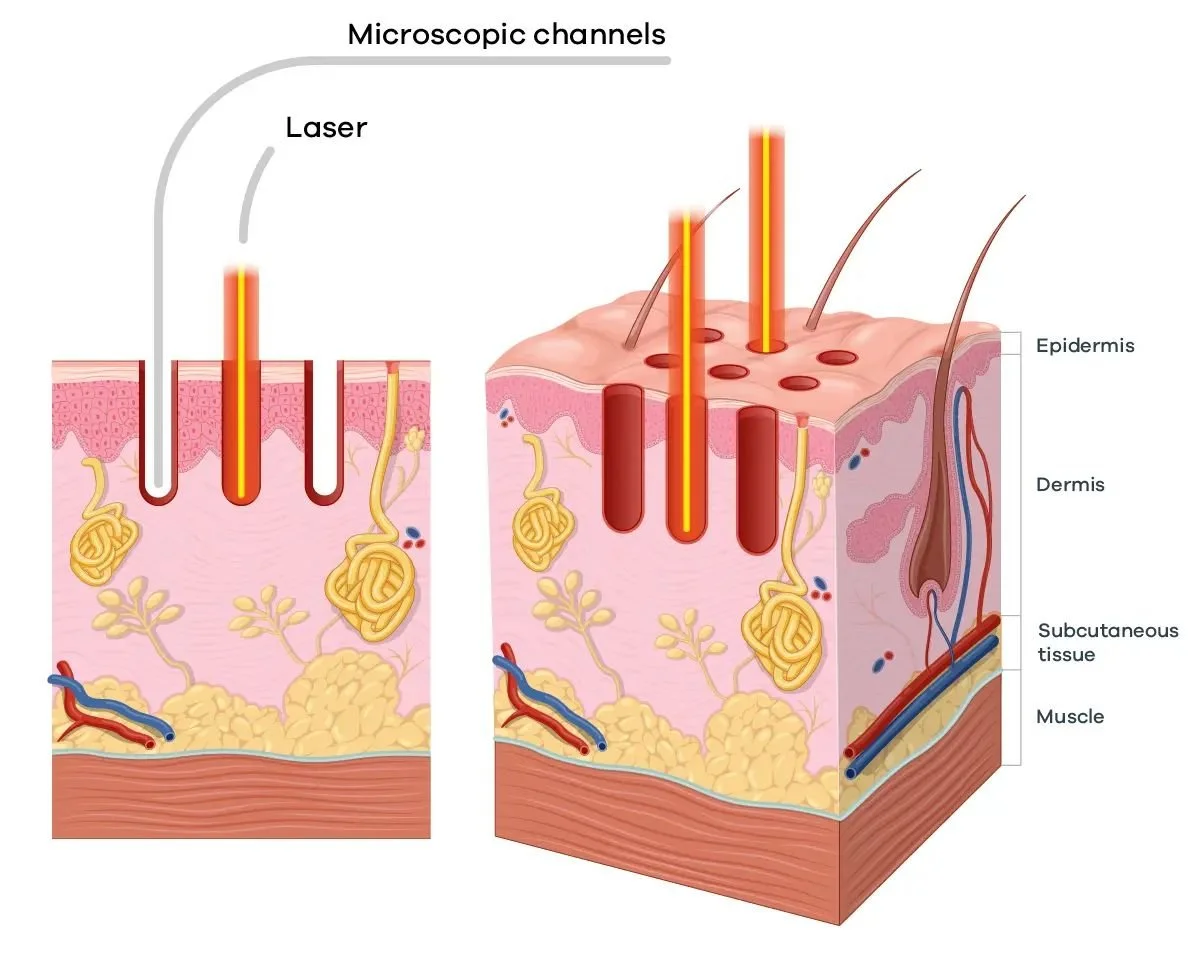
Fractional CO2 Laser is ablative. It targets the surface layer AND deeper layers simultaneously for resurfacing: improving acne scars, pores, and wrinkles. Downtime varies from minimal (~3 days for CoolPeel) to 5-7 days for more intensive settings.
In short: Pico treats the pigment under the surface. CO2 resurfaces the texture on the surface. We often recommend a strategic combination for comprehensive results.
Conclusion: Is Pico Right for You?
If you’re struggling with persistent pigmentation, dull skin texture, or want to truly enhance your skincare results, the Pico laser might be your solution. Its precision, power, and safety profile make it a versatile tool for a wide range of concerns and skin types.
Ready to see if Pico can help you achieve your clear-skin goals? This blog is just the starting point. Every skin story is unique. Book a complimentary consultation with me, and we’ll use advanced imaging to map your pigment, assess your skin’s needs, and create a personalized treatment plan just for you.
Let’s turn those questions about Pico into answers for your most beautiful skin.
Ready to reveal your most radiant skin? Our expert team at Glowing U Wellness specializes in advanced Pico laser treatments with proven results for clients throughout the South Bay area.
Contact Us: (424) 410-8911
Instagram: @glowinguwellness